
The Florios and Palermo’s class barrier
The Florios of SicilyThis flow follows the family’s effort to convert commercial wealth into social standing in a city that continues to define them by their origins.
increasing Bearing strength in each event
 decreasing
Bearing strength in each eventdecreasingLaborer as stigma

Laborer as stigma
Outsiders in trade
The Florios arrive in Palermo and face suspicion from established spice merchants. Their work and modest beginnings are used as evidence that they do not belong among respectable commercial families.
Respectability performed
They renovate the store, improve their clothes, and carefully present themselves as merchants rather than store boys. Their success changes how customers treat them but not every observer’s opinion.
The family learns that wealth can open doors while leaving the insult of origin intact.
A rejected suitor

A rejected suitor
Blood over merit
Vincenzo Florio courts Isabella Pillitteri, but Baroness Pillitteri rejects him as a laborer whose money cannot make him noble. The humiliation becomes a defining memory.
Ambition hardened
Vincenzo leaves for England, studies business, and returns increasingly determined to become too rich and powerful to be dismissed. His ambition seeks social recognition as well as commercial success.
The rejection shows how class prejudice converts a personal disappointment into a long-term program of self-assertion.
A palace without acceptance
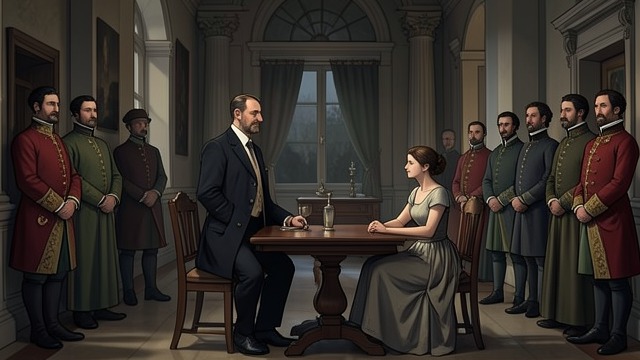
A palace without acceptance
Wealth displayed
Vincenzo builds an imposing home, cultivates aristocratic partners, and hosts dinners worthy of princes. Even so, noblewomen treat Giulia Portalupi Florio as a former mistress rather than an equal.
The title’s limit
Vincenzo gains influence and business relationships, yet social acceptance remains conditional. His daughters face the stigma of illegitimate birth, and his son is expected to achieve what wealth alone cannot.
The family’s story questions whether economic power can overcome inherited status when society continues to guard its boundaries.
1799 to 1810
1817
1830s to 1860s
